Financial regulation faces a genuine dilemma when confronted with innovation. Rules written for established products can inadvertently block genuinely useful new ideas. However, loosening those rules can expose consumers and the financial system to untested products with unknown consequences. The regulatory sandbox helps regulators resolve this tension in a controlled, supervised environment. Innovators can test new financial products, services, and business models with real customers under regulatory oversight and defined safeguards. This approach allows them to test their innovations before they face the full weight of regulation. It lets innovation and regulation learn about each other in a contained space, rather than colliding in the open market.
For India’s fintech ecosystem, one of the world’s most dynamic, the RBI’s regulatory sandbox has become an important bridge between innovation and regulation. It reflects a broader shift in how regulators engage with technology-driven change. Instead of simply reacting after the fact, regulators now create structured spaces to understand and shape innovation as it develops.
This guide explains what a regulatory sandbox is and why it exists. It also covers how the sandbox works, the cohort model, and the RBI’s specific framework. Finally, it examines the key benefits and limitations and explains how the sandbox fits into the wider [RegTech]and innovation landscape.
What Is a Regulatory Sandbox?
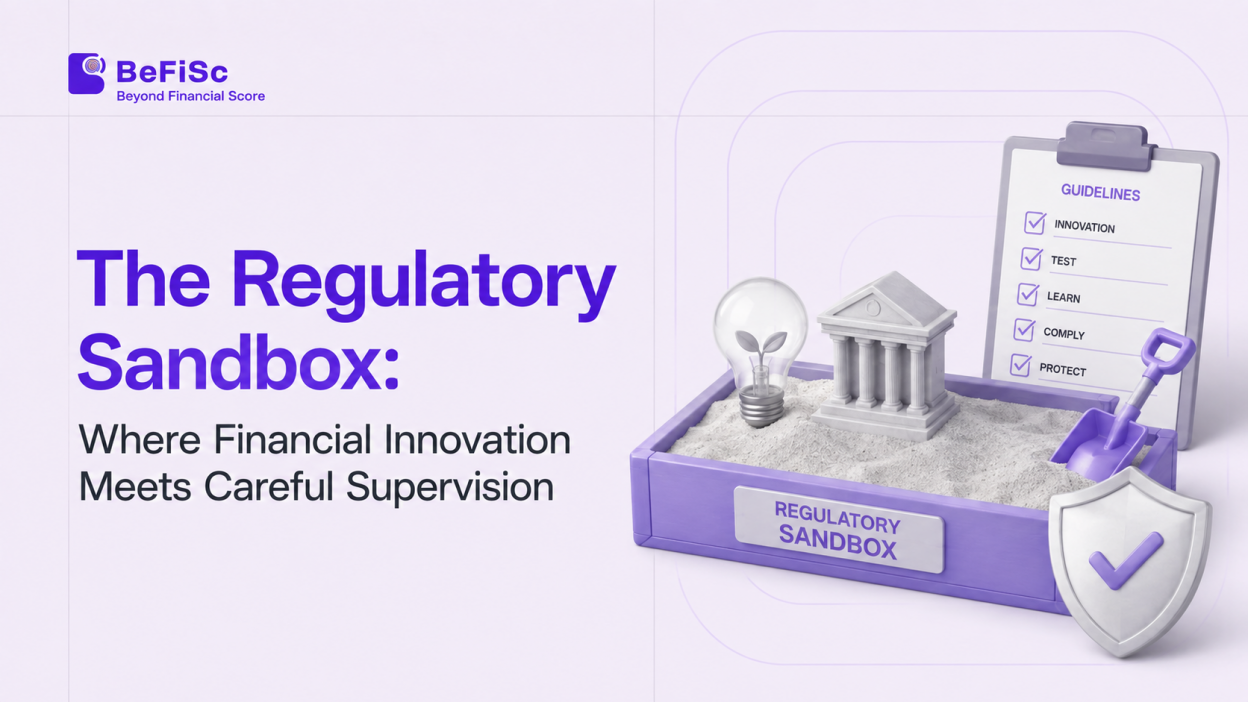
A regulatory sandbox is a framework set up by a financial regulator. It allows eligible businesses to test innovative financial products, services, or business models in a live but controlled environment with actual customers. Regulators supervise these tests and define specific regulatory relaxations, safeguards, boundaries, and testing periods.
The defining features are all captured in that definition. The testing is live using real customers and real transactions, not simulations, so the innovation is tested under genuine conditions. But the sandbox remains controlled and limited in scope, scale, duration, and customer numbers. It also uses defined safeguards to contain problems and limit potential consumer harm. It is supervised by the regulator, who oversees the testing closely learning from it. It involves regulatory relaxation; certain regulatory requirements may be relaxed or adapted for the test, allowing innovations that current rules would otherwise block or burden.
The essence is a contained space for experimentation. The sandbox creates a defined environment where regulators temporarily and partially lift the full weight of regulation. They do so under supervision and with safeguards. This allows innovators to test genuinely new ideas without facing rules designed for other products or exposing the wider system to untested risks.
In this sense, the sandbox acts as a controlled experiment in financial innovation. It helps innovators and regulators learn whether a new product works and how they should regulate it. The product can then scale under full regulation or be set aside. This learning-focused approach sets the sandbox apart from unregulated launches and full regulatory approval.
The Problem the Sandbox Solves
The regulatory sandbox exists because innovation and regulation often create tension. Understanding this tension helps explain the sandbox’s value.
The regulation-innovation mismatch. Financial regulators typically write rules for known, established products and business models. However, when innovators introduce novel products, technologies, and models that existing rules did not anticipate, those rules may not fit. They may inadvertently block innovation or impose requirements designed for different products. They may also create uncertainty about how regulators should oversee innovations. As a result, this mismatch can stifle useful innovation. The problem may not stem from the innovation itself, but from a framework designed for different circumstances.
The uncertainty problem. Innovators often face uncertainty about how regulators will treat their new products. They may not know which rules apply or what compliance requires. They may also question whether their business model is permissible.
This uncertainty creates a barrier. Investing in or launching a product without knowing its regulatory treatment carries significant risk. Many innovators therefore need regulatory clarity before they proceed. The sandbox provides a space to resolve this uncertainty through supervised testing and engagement with regulators.
The risk of unregulated launch. The alternative to a sandbox is to launch innovations without clear regulation or a full understanding of their risks. This can expose consumers and the financial system to harm. Untested products may operate without appropriate safeguards. Regulators cannot simply wave innovations through, nor can they responsibly ignore them.
The regulator’s knowledge gap. Regulators often lack a full understanding of how innovations work, what risks they carry, and how they should regulate them. Without a controlled way to learn about innovations, regulators must react with limited knowledge. As a result, they may over-restrict useful innovations or under-regulate untested risks. The sandbox lets regulators learn.
The sandbox resolves this tension by creating a middle path between blocking innovation and allowing unregulated launches. It gives innovators a controlled space to test their products. It helps regulators learn, resolve uncertainty, and protect consumers before products reach full-scale markets or face full regulation. This approach turns the innovation-regulation collision into a structured learning process. That is why financial regulators worldwide have adopted sandboxes.
How a Regulatory Sandbox Works
While specifics vary by regulator, regulatory sandboxes follow a common general process that embodies their controlled, supervised, time-limited nature.
Application and eligibility. Innovators apply to enter the sandbox. The regulator then assesses each applicant against key criteria. These may include genuine innovation, consumer or system benefits, testing readiness, and a real need or regulatory question.
Not every product qualifies. The sandbox focuses on genuine innovations that require supervised testing. The regulator selects which applicants can enter.
Test design and boundaries. For accepted innovations, the regulator and innovator agree on the test parameters. These include the scope, duration, customer numbers, limits, and safeguards. They also define any regulatory relaxations and the outcomes and data they will measure. These boundaries define the controlled environment, limiting scale and risk while enabling meaningful testing. Consumer-protection safeguards (disclosures, limits, compensation arrangements) are central to the design.
Live testing under supervision. The innovator then tests the product with real customers within agreed boundaries. The regulator closely supervises the process. The innovator operates the product on a limited scale under regulatory oversight. This generates real-world data on performance, emerging risks, and regulatory requirements. The regulator monitors throughout, learning and able to intervene if problems arise.
Evaluation and exit. At the end of the test period, the regulator and innovator evaluate the results. Did the innovation work? What risks emerged? How should regulators regulate the innovation? The innovation then “exits” the sandbox with a clear outcome. It may proceed to a full launch under newly clarified regulations. It may also require modifications or inform regulatory changes. If it proves unsuccessful or too risky, regulators may discontinue it. The sandbox is a testing phase, not a permanent home; innovations pass through it and out.
The learning loop. Throughout the process, both sides gain valuable insights. Innovators learn whether their products work and meet regulatory requirements. Regulators learn about the innovations, their risks, and potential regulatory changes.
This mutual learning can support broader regulatory development. It often proves as valuable as the outcomes of individual product tests.
This general process applies across jurisdictions: design a bounded test, conduct live testing under supervision, evaluate the results, and exit the sandbox. This process reflects the sandbox’s controlled, supervised, time-limited, and learning-oriented nature.
The Cohort Model
Many regulatory sandboxes, including the RBI’s, use a cohort model. Understanding this model clarifies how sandboxes work in practice.
What a cohort is. The cohort model runs the sandbox in batches called “cohorts.” Each cohort typically focuses on a specific theme or area. The regulator announces the theme and invites applications. It then selects a group of innovators to test together and runs their tests over a defined period.
The thematic focus. Each cohort usually centres on a specific area, for example, retail payments, cross-border payments, MSME lending, or prevention of financial fraud. This thematic focus lets the regulator concentrate attention and learning on a particular domain of innovation at a time, building focused understanding of that area’s innovations, risks, and regulatory needs. It also signals the regulator’s priorities and invites innovation in areas it wants to understand.
Why the cohort model is used. The cohort model offers several advantages: it lets the regulator manage the sandbox’s workload in structured batches rather than a continuous stream; it concentrates learning by theme; it allows comparison and shared learning across similar innovations tested together; and it lets the regulator direct innovation toward priority areas through cohort themes. The structured, thematic, batched approach makes the sandbox manageable and focused.
The evolution across cohorts. As the sandbox runs successive cohorts on different themes, it builds cumulative understanding across the innovation landscape, and its themes reflect evolving priorities. Some sandboxes also move toward more continuous (“on-tap”) models over time, accepting applications on an ongoing basis alongside or instead of discrete cohorts, as they mature.
The cohort model is thus a practical way of organising the sandbox, running focused, thematic batches of innovation testing that concentrate regulatory attention and learning while managing the process. Understanding it clarifies how sandboxes like the RBI’s actually operate and how innovators engage with them (applying to relevant themed cohorts).
The RBI Regulatory Sandbox
The Reserve Bank of India (RBI) operates India’s principal financial regulatory sandbox, and its framework illustrates how the sandbox model works in the Indian context.
The framework. The RBI established a regulatory sandbox framework to enable live testing of innovative financial products and services in a controlled environment, supporting responsible fintech innovation while maintaining oversight and consumer protection. The framework sets out eligibility, the process, safeguards, and the cohort-based approach through which the RBI runs the sandbox.
The cohort themes. The RBI has run its sandbox through successive cohorts on various themes relevant to India’s fintech and financial priorities spanning areas such as retail payments, cross-border payments, MSME lending, and prevention and mitigation of financial fraud, among others. Each cohort focused RBI attention on innovations in that domain, testing eligible products live under supervision. The themes reflect areas where the RBI sought to understand and enable innovation.
The eligibility and safeguards. The RBI sandbox has criteria for the innovations and entities it admits (genuine innovation, benefit, readiness) and builds in consumer-protection safeguards and boundaries for live testing, consistent with the general sandbox model. It is a controlled, supervised testing environment, not a route to unregulated launch.
The role in India’s fintech ecosystem. The RBI sandbox is part of India’s broader approach to fintech innovation, which also includes innovation hubs and engagement mechanisms reflecting a regulatory stance that seeks to enable and understand innovation while managing risk. Indian fintechs can use the sandbox to test innovative products under RBI supervision, gain regulatory clarity, and shape how regulators oversee their innovations. It sits alongside the wider digital-finance developments framework that make India a significant fintech environment.
Other Indian financial regulators (such as those overseeing securities and insurance) have also developed sandbox and innovation mechanisms in their domains, extending the sandbox approach across India’s financial-regulatory landscape. The RBI sandbox, though, is the central example for banking and payments innovation, illustrating how the regulatory sandbox concept operates in one of the world’s most active fintech markets.
Benefits for Innovators, Regulators and Consumers
The regulatory sandbox offers distinct benefits to each of its three stakeholders, which together explain its value and spread.
For innovators. The sandbox provides a route to test innovative products with real customers under regulatory supervision, gaining regulatory clarity and engagement that reduces the uncertainty barrier. It lets innovators validate their products in reality, resolve how they will be regulated, and build regulator relationships, advantages particularly valuable for genuinely novel products facing regulatory uncertainty. The sandbox can also lend credibility, signalling that an innovation has been tested under regulatory oversight.
For regulators. The sandbox lets regulators learn about innovations in a controlled way, understanding new products, technologies, and risks first-hand, and informing how regulation should adapt. It positions regulators to engage proactively with innovation rather than reacting from ignorance, and to shape the development of new products toward good outcomes. The learning generated feeds regulatory development, helping rules keep pace with innovation. The sandbox also lets regulators direct innovation toward priority areas through cohort themes.
For consumers and the system. By testing innovations under supervision with safeguards before full-scale launch, the sandbox protects consumers and the system from untested risk while still enabling beneficial innovation to reach them. Consumers ultimately benefit from useful innovations that the sandbox helped bring to market responsibly, and from the consumer-protection safeguards built into testing. The controlled environment limits the harm any failed innovation can cause.
The mutual benefit. The sandbox’s value lies in serving all three simultaneously, enabling innovation (for innovators), generating regulatory learning and control (for regulators), and maintaining protection (for consumers). This alignment is why the sandbox is a widely adopted mechanism: it offers a positive-sum resolution to the innovation-regulation tension, benefiting innovators, regulators, and consumers together rather than trading one off against another.
Limitations and Criticisms
A balanced view requires acknowledging the regulatory sandbox’s limitations and the criticisms it has attracted, which temper its benefits.
Limited scale and selectivity. The sandbox admits only selected innovations in limited numbers, testing at limited scale. It cannot accommodate all innovations, and the selectivity means many innovators do not access it. Critics note that the sandbox benefits a limited set of participants and may not address innovation barriers broadly.
The scaling gap. Success in the sandbox’s controlled, limited environment does not guarantee success or straightforward regulation at full scale. Innovations that work in the contained test may face different challenges when scaled up under full regulation, and the transition from sandbox to full market can be difficult. The sandbox tests at small scale; real-world scaling raises new questions.
Resource and time demands. Participating in and running a sandbox demands resources and time from both innovators and regulators. For innovators, the application and testing process is an investment; for regulators, close supervision of tests is resource-intensive. This limits how much the sandbox can do.
The favouritism and competition concerns. Some critics worry that sandboxes may advantage selected participants over non-participants, or that regulatory engagement through sandboxes could favour certain firms, raising fairness and competition questions. Ensuring the sandbox is accessible and fair is an ongoing concern.
The “innovation theatre” risk. There is a risk that sandboxes become more symbolic than substantive, signalling regulatory openness to innovation without delivering meaningful regulatory change or broad benefit. The sandbox’s real value depends on it genuinely generating learning and regulatory adaptation, not merely serving as a showcase.
These limitations do not negate the sandbox’s value but temper it: the sandbox is a useful, if limited, mechanism benefiting selected innovations and generating regulatory learning, but not a complete solution to the innovation-regulation challenge, and dependent on genuine regulatory engagement to deliver its promised benefits. Understanding both its value and its limits gives a realistic view of what the sandbox can and cannot do.
The Sandbox in the Broader Innovation Ecosystem
The regulatory sandbox forms part of a broader set of mechanisms that regulators use to engage with financial innovation, putting the sandbox into a wider context.
Innovation hubs and engagement. Alongside sandboxes, many regulators operate innovation hub mechanisms for engaging with, advising, and supporting innovators without necessarily live-testing products. Innovation hubs provide guidance and dialogue more broadly than the selective sandbox, complementing it. Together, sandboxes and hubs form a spectrum of regulatory engagement with innovation.
The SupTech connection. Regulators’ engagement with innovation through sandboxes connects to their own adoption of technology (SupTech). As regulators understand and supervise innovative, data-driven finance, they develop the technological capabilities to do so. The sandbox is part of a regulatory modernisation that includes SupTech.
The RegTech relationship. The innovations tested in sandboxes often include compliance and regulatory technology, and the sandbox can help such innovations gain regulatory understanding and acceptance. The sandbox and RegTech are linked: the sandbox is a mechanism through which regulatory-technology innovations (among others) can be tested and understood.
Global proliferation. Regulatory sandboxes have spread across financial regulators worldwide, becoming a common feature of how modern regulators engage with fintech. This global adoption reflects a broad shift toward proactive, engaged regulation of innovation, with regulators worldwide creating structured spaces to understand and shape technological change rather than merely reacting to it. Cross-border and multi-jurisdictional sandbox initiatives have also emerged, addressing innovation that spans countries.
The strategic significance. The sandbox reflects a fundamental evolution in the regulator’s role from a purely rule-enforcing body reacting to change, toward an engaged participant in innovation that creates spaces to learn about and shape it. This engaged posture, embodied in the sandbox and its companions, is part of how financial regulation adapts to an era of rapid, technology-driven change. The sandbox is both a practical testing mechanism and a symbol of this more engaged, learning-oriented regulatory approach, which is why it matters beyond the individual innovations it tests.
Key Takeaways
- A regulatory sandbox is a regulator-run framework letting eligible businesses test innovative financial products live with real customers, in a controlled, supervised environment with regulatory relaxations and safeguards, for a limited period.
- It solves the innovation-regulation tension where rules written for established products can block useful innovation or leave uncertainty by creating a contained space for mutual learning between innovators and regulators.
- It works through application and eligibility, bounded test design, live supervised testing, and evaluation and exit, generating learning for both innovator and regulator throughout.
- Many sandboxes, including the RBI’s, use a cohort model running thematic batches of innovation testing (retail payments, cross-border payments, MSME lending, fraud prevention) that concentrate regulatory attention.
- It benefits innovators (testing and clarity), regulators (learning and control), and consumers (protected access to beneficial innovation), but has real limits: selectivity, scaling gaps, resource demands, and is one part of a broader innovation-engagement ecosystem.
Frequently Asked Questions
What are the limitations of a regulatory sandbox?
Sandboxes admit only selected innovations at limited scale, so they benefit a limited set of participants; success in the controlled test doesn’t guarantee smooth scaling under full regulation; they demand resources and time; and there are fairness and “innovation theatre” concerns. The sandbox is useful but not a complete solution.
What is a cohort in a regulatory sandbox?
A cohort is a batch of innovations, usually focused on a specific theme, tested together in the sandbox over a defined period. The cohort model lets regulators concentrate attention and learning on a particular domain at a time, manage workload in structured batches, and direct innovation toward priority areas.
How does the RBI regulatory sandbox work?
The RBI regulatory sandbox enables live testing of innovative financial products in a controlled, supervised environment, run through thematic cohorts on areas like retail payments, cross-border payments, MSME lending, and fraud prevention. Eligible innovations are tested with real customers under RBI oversight and safeguards.
Why do regulators create regulatory sandboxes?
Regulators create sandboxes to resolve the tension between innovation and regulation, where rules written for established products can inadvertently block useful innovation or leave uncertainty. The sandbox creates a controlled space where innovations can be tested, regulators can learn, and consumer protection is maintained before a full-scale launch.
What is a regulatory sandbox?
A regulatory sandbox is a framework set up by a financial regulator that allows eligible businesses to test innovative financial products and services in a live but controlled environment with real customers, under supervision and with specific regulatory relaxations and safeguards, for a limited period.
Conclusion
The regulatory sandbox represents a quiet but significant shift in how financial regulation meets innovation. Rather than forcing a binary choice to block the untested new product or let it loose on the market, the sandbox creates a third path: a contained space where innovation and regulation can learn about each other before committing to full-scale reality. In doing so, it transforms what was a collision into a conversation, letting genuinely new ideas prove themselves under supervision while regulators build the understanding they need to regulate wisely.
For India, with one of the world’s most vibrant fintech ecosystems, the RBI’s sandbox and its cohort-based, thematically focused approach embody this engaged posture. It tests innovations in payments, lending, and fraud prevention under oversight while generating insights that shape how a fast-moving sector is regulated.
Yet the sandbox is no panacea. Its selectivity, scaling gaps, and resource demands mean it is one tool among several. Its value depends on the genuine learning and regulatory adaptation it produces rather than the openness it symbolises.
Understood realistically, the regulatory sandbox is a meaningful mechanism for reconciling the pace of innovation with the deliberateness of regulation. More broadly, it shows how modern regulators are evolving from reactive rule-enforcers into engaged participants in technological change. As finance continues to evolve, the ability to test, learn, and adapt in a controlled space remains essential to responsible innovation.