

First Party Fraud India is emerging as a major challenge for banks, NBFCs, and digital lending platforms. Unlike identity fraud, first-party fraud involves genuine borrowers using their own identities while misrepresenting their financial situation or applying with no intention of repayment. Combined with bank statement manipulation, this type of fraud can lead to significant lending losses. Understanding how First Party Fraud India works is essential for lenders seeking to strengthen underwriting, detect intentional defaults, and reduce credit risk.
What Is First Party Fraud India and Why Is It Growing?
First-party fraud occurs when the genuine account holder, using their real identity and their own credentials, acts fraudulently against the lender. In the digital lending context, it most commonly manifests as: applying for credit with no intention of repayment; credit risk assessment signals to obtain credit that would otherwise be declined; and manipulating one’s own financial documents (bank statements, salary slips) to overstate creditworthiness.
First-party fraud is increasing in India’s digital lending sector due to structural factors. The proliferation of the RBI digital lending ecosystem, with short approval timelines, has created an environment in which the economics of intentional default are favourable: the loan amount is small enough that pursuing recovery is uneconomical for the lender, but the aggregate across a fraudulent borrower’s multiple simultaneous applications is significant. The availability of tools for self-modifying financial documents, such as consumer PDF editors, has made bank statement manipulation accessible to borrowers who would not otherwise have considered it.
The credit bureau ecosystem, while increasingly comprehensive, does not yet provide the real-time cross-lender visibility that would make simultaneous multi-lender application patterns immediately detectable at each individual lender.
First-Party Fraud vs Third-Party Fraud: Detection Differences
The fundamental detection difference is that first-party fraud uses genuine identity signals. A first-party fraudster’s KYC identity verification gaps. Their Aadhaar is genuinely theirs. Their face matches the passport because they are the person on the document. Their stated address is real. The fraud is in their intent and often in the accuracy of their financial representation, not in their identity.
This means that the verification controls designed to catch identity fraud liveness detection, face match, PAN verification, and the Aadhaar eKYC process explained do not protect against first-party fraud. The signals that detect first-party fraud are different: enhanced due diligence in banking (how many lenders have pulled this person’s bureau in the past 30 days, indicating simultaneous multi-lender applications), hidden fraud signals lenders miss(how the application is filled out, what the device fingerprint shows about prior application history), post-disbursement transaction monitoring (immediate transfer of the full disbursed amount to an unrelated account), and PDF fraud detection risks (whether submitted bank statements have been manipulated).
For lenders that invest primarily in identity verification but not in financial document verification or behavioural analytics, the first-party fraud detection gap is significant.
Bank Statement Fraud: How It Is Done and How to Detect It
Bank statement fraud in the context of first-party fraud involves a genuine borrower modifying their own bank statement to underwriting automation using APIs, reducing visible debt, or removing negative transactions (bounced payments, EMI defaults) that would affect their creditworthiness. The motivation is not to create a fraudulent identity; it is to misrepresent financial health.
The modifications most commonly made by first-party fraudsters to their own bank statements are: transaction-level fraud detection (increasing salary or business credit amounts), removing debit entries that show existing EMIs or debt service, changing the opening or closing balance, and, in more sophisticated cases, fabricating additional months of statements with consistent but inflated transaction patterns.
Detection approaches that work for first-party bank statement fraud: PDF metadata analysis (examining the document’s creation and modification history a genuine bank statement exported from internet banking has specific software signatures that differ from a statement edited in a consumer PDF tool); transaction consistency checking (verifying that the mathematical relationship between opening balance, credits, debits, and closing balance is internally consistent across the statement); cross-referencing credit entries against UPI or NEFT transaction IDs that are checkable against bank APIs or reference databases; and account number and IFSC verification against the issuing bank’s registry data to confirm the account is genuine.
Bank statement analysis APIs that automate these checks provide a structured risk output in seconds, identifying specific inconsistency signals that warrant manual review, without requiring each bank statement to be manually examined by a credit analyst.
Behavioural and Application Signals That Indicate Intent to Default
Behavioural signals during the application session before any financial document is submitted can provide early indicators of first-party fraud risk. These signals are invisible to the applicant and cannot be deliberately gamed in the way that submitted documents can.
Application form completion velocity: applicants who complete multi-section forms in an unusually short time, implying pre-populated data or automated form filling, show a different pattern from genuine applicants navigating a new form. Editing behaviour: applicants who make numerous edits to specific fields (particularly income and employment fields) before final submission show a different pattern from those who complete the form with minimal edits. Device and browser fingerprinting: an applicant whose device has been used for multiple recent loan applications across different platforms visible through device fingerprinting networks is a simultaneous multi-lender application indicator.
Post-disbursement signals are the most definitive but the most expensive: a borrower who transfers the entire disbursed amount to an unrelated account within hours of disbursement, then makes no further account activity, is exhibiting a first-payment default pattern. By this point, the fraud has been executed, but early detection allows rapid recovery action.
Bureau and Consortium Data in First-Party Fraud Detection
Credit bureau inquiry velocity is one of the most reliable first-party fraud signals available. When a borrower is simultaneously applying to multiple lenders, maximising total disbursement from a single fraud execution, each lender’s bureau inquiry appears on the record. An applicant whose bureau has been pulled by five or more institutions in the past 30 days, without a corresponding new credit account explaining the inquiries, is exhibiting multi-lender application behaviour that warrants heightened scrutiny.
India’s credit bureaus CIBIL, Experian, Equifax, and CRIF High Mark all include inquiry records in their bureau reports. The challenge is that the bureau report reflects inquiries up to the time of the most recent pull, not real-time. In a scenario where a fraudster is simultaneously applying to ten lenders in a single day, the first five lenders to pull the bureau may not see the others’ inquiries.
Consortium-based fraud data sharing, where lenders share confirmed fraud event data in near-real-time through a shared database, addresses this gap more effectively than bureau inquiry data alone. Several industry-level fraud data sharing initiatives exist in India, and participation in them provides the cross-lender visibility that individual bureau checks cannot.
Building a First-Party Fraud Detection Framework
An effective first-party fraud detection framework has four layers. The first is financial document integrity: automated bank statement analysis covering metadata, mathematical consistency, transaction plausibility, and account verification. This is the most direct defence against income misrepresentation.
The second is credit bureau and consortium intelligence: inquiry velocity analysis, existing debt load relative to stated income, derogatory history that may suggest serial defaulting behaviour, and consortium fraud flag data. This addresses simultaneous multi-lender applications and known fraudsters.
The third is application behavioural analytics: session behaviour signals (completion velocity, editing patterns, device fingerprint history) that indicate automated or repeat application behaviour. This provides risk signals that precede document submission and are not gameable by the applicant.
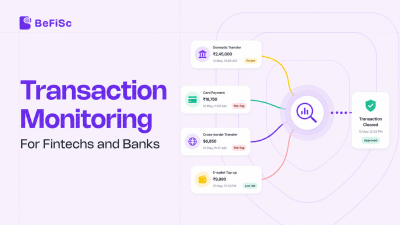
The fourth is post-disbursement monitoring: early delinquency pattern detection and transaction monitoring for immediate post-disbursement fund transfer, enabling rapid escalation and recovery action when first-party fraud is confirmed post-disbursement. Together, these four layers create a detection system that addresses the full spectrum of first-party fraud, from intent at application through confirmation post-disbursement.
The BNPL First-Party Fraud Problem: Small Tickets, Large Scale
Buy Now Pay Later (BNPL) products present a specific first-party fraud profile that differs from larger-ticket personal loans or MSME credit. The ticket size is small, typically ₹500 to ₹15,000; the approval process is near-instant, and the repayment tenure is short. These characteristics create an economic environment that is particularly attractive to first-party fraudsters: the cost of the fraud to the individual is a single missed payment on a small amount, the consequence (credit bureau default) may seem distant or manageable, and the asymmetry between what is received (goods or services) and what is lost (credit score impact, potential legal action on a small amount) favours the fraudster.
The scale problem emerges because the same individual can execute this fraud across multiple BNPL providers simultaneously. With ten BNPL providers active in the Indian market, a fraudster who completes four simultaneous ₹10,000 BNPL transactions across four platforms in a single day has extracted ₹40,000 while creating four ₹10,000 defaults, each of which individually is below the threshold that triggers intensive recovery pursuit at any single lender.
The industry-level response requires shared data: consortium fraud intelligence that flags individuals who have recently defaulted on BNPL products at other platforms before they are approved at the next one. The credit bureau inquiry velocity signal, pulling bureau data and seeing five inquiries from BNPL providers in the past 48 hours, is the most accessible proxy for this pattern when consortium data is not available.
For BNPL providers, the fraud prevention calculus is also economic: the verification investment must be proportionate to the ticket size. A ₹5,000 BNPL purchase cannot sustain the same per-verification cost as a ₹5 lakh personal loan. This drives the emphasis on lightweight but high-signal checks: device fingerprint, phone number recency, bureau velocity, and application session behaviour, all of which add negligible latency and minimal cost while providing meaningful fraud signal at small-ticket scale.
Key Takeaways
- First-party fraud uses real identity credentials; it is invisible to identity verification controls and requires different detection signals: document integrity, bureau velocity, behavioural analytics.
- Bank statement fraud by genuine borrowers is detected through PDF metadata analysis, mathematical consistency checking, and transaction plausibility analysis, not OCR extraction alone.
- Bureau inquiry velocity, multiple bureau pulls by different lenders in a short period, is the most reliable signal for simultaneous multi-lender application fraud.
- Consortium-based fraud data sharing provides cross-lender visibility that individual bureau checks cannot participation is increasingly important for managing first-party fraud at scale.
- Post-disbursement monitoring detecting immediate full-balance transfer post-disbursement confirms first-party fraud intent and enables faster recovery action.
Frequently Asked Questions
How does first-party fraud affect BNPL providers?
BNPL providers face higher first-party fraud risk because small loan amounts, instant approvals, and short repayment periods make multiple simultaneous applications easier. Device fingerprinting, bureau velocity, phone number intelligence, and behavioural analytics can help detect repeat or coordinated applications.
How can lenders prevent first-party fraud before loan disbursement?
Lenders can combine bank statement analysis, bureau inquiry velocity, device intelligence, application behaviour, and consortium fraud data before approving a loan. These signals help identify income manipulation, simultaneous applications, and unusual borrower behaviour before funds are disbursed.
Why is credit bureau inquiry velocity a fraud signal?
When a borrower simultaneously applies to multiple lenders to maximise total disbursement from a single fraud execution, each lender’s bureau inquiry appears on the credit record. An applicant with five or more recent bureau pulls without a corresponding new credit account is showing multi-lender application behaviour that warrants enhanced scrutiny. Real-time consortium data sharing is more effective than bureau inquiry data alone for catching same-day multi-lender applications.
How do lenders detect manipulated bank statements?
Bank statement fraud detection combines: PDF metadata analysis (identifying post-creation editing via software signatures), mathematical consistency checking (verifying balance-credit-debit relationships across the statement), transaction plausibility analysis (checking patterns against expected salary or business income characteristics), and account number and IFSC verification against the issuing bank’s registry. Automated bank statement analysis APIs provide this risk assessment in seconds.
What is first-party fraud in digital lending?
First-party fraud occurs when the genuine borrower — using their real identity — misrepresents their financial position to obtain credit or applies with no intention of repaying. It is distinct from third-party fraud (using someone else’s identity). First-party fraud is invisible to identity verification and requires detection through financial document integrity checks, bureau inquiry velocity, and post-disbursement behavioural monitoring.
Conclusion
First-party fraud is the harder problem in digital lending not because the detection tools do not exist, but because it requires a different mental model. The borrower is real; the fraud is in their intent and representation. Lenders that have built robust identity verification but thin financial document intelligence and minimal behavioural analytics have strong defences against one type of fraud and weak defences against another. A complete fraud prevention framework addresses both.
[…] shares deep parallels with the [application fraud], [first-party fraud], and detection challenges this series has explored, applied to the specific context of insurance. […]
[…] after disbursal looks less like cash-flow stress and more like an intent pattern belonging to the [first-party fraud playbook]. We have documented. Repeated insufficient-funds returns, by contrast, argue for restructuring […]