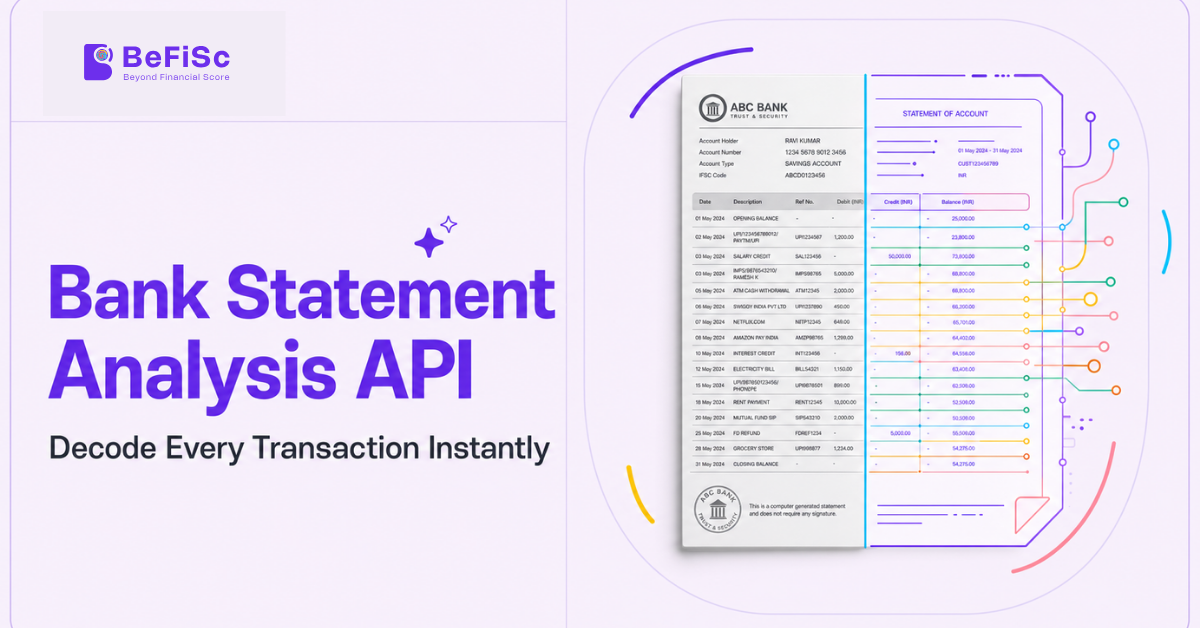
A borrower’s bank statement contains more real signal about their ability to repay a loan than almost any document a lender collects, yet for most of digital lending’s history it has been the hardest one to use at scale: a PDF or scanned image, formatted differently by every bank, that a human underwriter had to read line by line. Bank statement analysis APIs exist to close that gap: converting unstructured statement data into the structured cash-flow signals an automated underwriting model can actually consume.
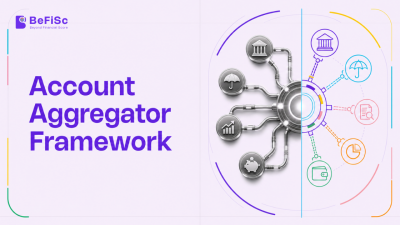
This guide explains what these APIs extract, how the underlying technology works, and where the category is heading as India’s Account Aggregator framework offers an alternative to statement parsing altogether.
What a Bank Statement Analysis API Extracts
At a baseline, these APIs extract every transaction line from a submitted statement date, description, debit or credit amount, and running balance and structure it into a consistent, machine-readable format regardless of which bank issued the original document. That structuring step alone has value, since India has dozens of major banks, each with its own statement layout, and a lender receiving applications from customers across banks needs a normalized view to compare them.
Beyond raw extraction, a more capable API categorizes each transaction: salary credits, EMI debits to other lenders, UPI transfers, recurring bill payments, cash withdrawals, and so on. This categorization is what turns a list of transactions into an actual financial picture, identifying, for instance, that a stated salary of a certain amount is corroborated by recurring monthly credits from an identifiable employer source, rather than taking the applicant’s stated income at face value.
The most advanced implementations also flag anomalies: unexplained large deposits shortly before a loan application (sometimes used to artificially inflate apparent account balance), evidence of round-tripping between accounts, or transaction patterns inconsistent with the stated occupation or business type.
How the Technology Works: OCR, Parsing, and Categorization
Statement analysis typically runs through three technical stages. First, if the input is a scanned image or a non-machine-readable PDF, optical character recognition (OCR) converts it to text a step where accuracy directly affects everything downstream, since an OCR error on a transaction amount propagates into every subsequent calculation.
Second, a parsing layer maps the extracted text into a structured schema, handling the substantial variation in how different banks format statements: column ordering, date formats, and how debits and credits are represented differ enough between institutions that a parser tuned only for a handful of major banks will fail silently on the rest, returning incomplete or misordered data rather than an obvious error.
Third, a categorization model, typically a combination of rule-based logic and machine learning trained on transaction description patterns, assigns each line item to a category. This is the layer where quality varies most between providers, since Indian transaction descriptions are often abbreviated, inconsistent, and bank-specific (a salary credit might appear as “NEFT-SALARY-XYZCORP” from one bank and a cryptic reference code from another), and a categorization model trained on limited data will misclassify a meaningful share of transactions.
The Underwriting Signals That Actually Matter
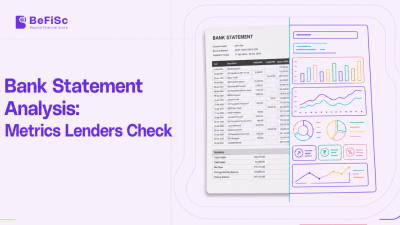
Raw categorized transactions still need to be converted into decision-ready signals. The metrics that matter most to lenders include average monthly balance and its volatility (a thin, volatile balance is a different risk profile than a stable one even at the same average), income consistency (regular versus sporadic credits), existing debt obligations visible as EMI debits to other lenders (a critical input for calculating a realistic debt-to-income ratio that the applicant’s own disclosure might understate), and bounce or penalty charges, which are one of the more direct signals of financial stress available in transaction data.
Statement Parsing Versus the Account Aggregator Framework
India’s Account Aggregator (AA) ecosystem, built under RBI’s Non-Banking Financial Company Account Aggregator framework, offers an alternative path to the same underlying data: instead of parsing a PDF the customer uploads, a lender requests consented, structured financial data directly from the customer’s bank via an AA intermediary, delivered in a standardized schema regardless of source bank.
The two approaches aren’t strictly competing; they solve overlapping but distinct problems. AA data arrives pre-structured and consent-verified at the source, removing OCR and parsing error entirely, but depends on the customer’s bank being live on the AA network and the customer completing a consent flow, which not every applicant will do smoothly, particularly for older accounts or smaller banks with incomplete AA coverage. PDF-based statement analysis works with whatever document a customer already has and can produce, making it a necessary fallback and, for many lenders today, still the primary path even as AA adoption grows.
A well-architected underwriting stack increasingly treats these as complementary: attempting AA-based data retrieval first where available, falling back to statement upload and analysis where it isn’t, rather than committing exclusively to one path and losing applicants the other would have captured.
What to Evaluate in a Bank Statement Analysis Provider
- OCR accuracy across statement formats, not just the major banks: ask for accuracy figures across a representative sample of regional and smaller-bank statement formats, since this is where generic providers tend to underperform.
- Categorization granularity and accuracy, particularly for India-specific transaction patterns (UPI references, NEFT/IMPS descriptions, EMI debits to other NBFCs) rather than a categorization model built primarily for other markets.
- Fraud and tampering detection: whether the provider checks for statement manipulation (altered balances, edited transaction lines) as part of the analysis, not just extraction.
- AA network integration, if the lender intends to use consented data retrieval alongside or instead of document upload.
- Turnaround time and API latency under realistic document volume, since statement analysis is often a bottleneck step in an otherwise fast digital lending flow.
Key Takeaways
- Bank statement analysis APIs convert unstructured PDF or scanned statements into structured, categorized transaction data usable by automated underwriting models.
- The pipeline typically involves OCR, format-specific parsing, and a categorization layer; categorization quality on India-specific transaction patterns is where providers differ most.
- Average balance volatility, income consistency, existing EMI obligations visible in transaction data, and bounce charges are the underwriting signals lenders rely on most.
- India’s Account Aggregator framework offers a consent-based alternative to PDF parsing, delivering pre-structured data without OCR risk, but depends on bank AA-network coverage and customer consent completion.
- The strongest underwriting stacks combine both approaches: AA-based retrieval where available, with statement parsing as a fallback rather than relying exclusively on one.
Frequently Asked Questions
Does bank statement analysis replace credit bureau checks?
No, the two serve complementary purposes. Credit bureau data reflects an applicant’s formal credit history and repayment record across lenders, while bank statement analysis reveals actual cash-flow behavior, including for applicants with thin or no formal credit history, making it especially valuable for first-time borrowers and the informal economy.
How many months of bank statements do lenders typically analyze?
This varies by lender policy and loan type, though three to six months of statement history is common practice for establishing a reliable income and cash-flow pattern, with longer histories sometimes required for larger loan amounts or self-employed applicants with more variable income.
Can a bank statement analysis API detect a falsified or edited statement?
More advanced providers include tampering-detection features that check for inconsistencies in formatting, metadata, or transaction-balance arithmetic that suggest manual editing, though this capability varies significantly between vendors and should be explicitly confirmed rather than assumed.
How accurate is OCR-based bank statement analysis?
Accuracy varies significantly by provider and by statement format. Major-bank statements with consistent, machine-generated PDF layouts are parsed more reliably than scanned images or statements from smaller or regional banks with less standardized formats. Lenders should request accuracy benchmarks across their actual applicant bank mix, not an aggregate industry figure.
Is bank statement analysis the same as the Account Aggregator framework?
No. Bank statement analysis parses a document (typically a PDF) the customer uploads; the Account Aggregator framework retrieves structured financial data directly from the bank with the customer’s explicit consent, without requiring a document upload. Many lenders use both, depending on the customer’s bank and consent completion.
Conclusion
Bank statement analysis has moved from a manual underwriting bottleneck to one of the more information-dense automated signals available to Indian lenders, particularly as the technology has improved at handling the format diversity across Indian banks. The emergence of the Account Aggregator framework doesn’t make this category obsolete it adds a second data path that the strongest underwriting stacks now use alongside statement parsing rather than as its replacement.
For a lender evaluating this category, the differentiator worth scrutinizing closely is categorization accuracy on India-specific transaction patterns, since a provider whose model was built primarily for other markets will systematically underperform on the exact transaction types UPI, NEFT salary credits, EMI debits to regional NBFCs that carry the most underwriting signal here.