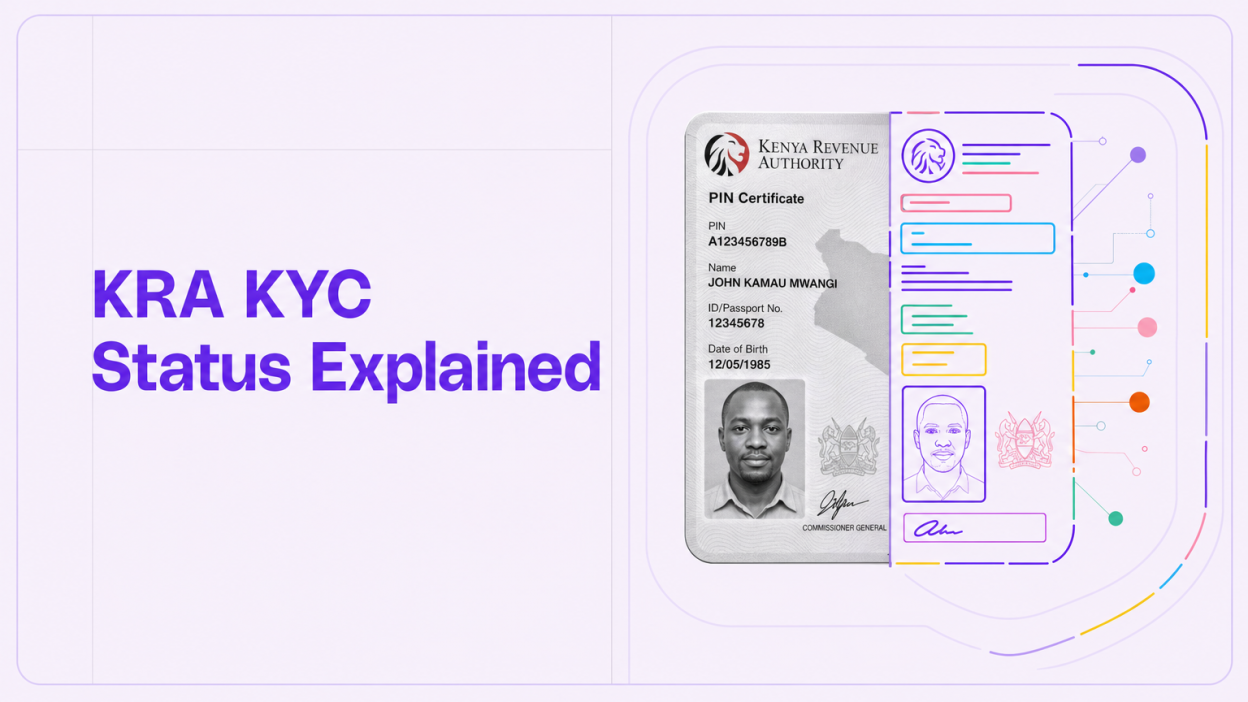
Your KRA KYC status is the label a SEBI-registered KYC Registration Agency (KRA) attaches to your investor KYC record. It tells mutual funds, brokers and other intermediaries whether your PAN, name, address and contact details have been verified against official sources, and whether you can open new accounts or keep transacting.
Most investors look up this status only when something breaks: a SIP fails, a new demat account is refused, or a fund house emails about “KYC on hold”.
SEBI rewrote the rules behind these labels in 2023 and 2024. This guide explains each status, how to check and fix it, and what intermediaries should verify before a record reaches a KRA.
What a KRA Is and Why Your Status Matters
KRA stands for KYC Registration Agency. It is an entity registered with SEBI under the SEBI {KYC (Know Your Client) Registration Agency} Regulations, 2011, which centralises investor KYC so that you do not repeat the full process with every broker or fund house.
Five KRAs operate today: CVL KRA (CDSL Ventures), NDML KRA (NSDL Database Management), CAMS KRA, KFintech KRA (formerly Karvy) and DotEx KRA (NSE). Their systems are interoperable, so a record created through one is visible to intermediaries querying any of them.
When you complete KYC with a broker, AMC or adviser, that intermediary uploads your details to a KRA, which checks key attributes against official databases and assigns a status that travels with your PAN.
What the KRA actually verifies
Under SEBI’s circular of 14 May 2024 (SEBI/HO/MIRSD/SECFATF/P/CIR/2024/41), KRAs must verify three core attributes, PAN, name and address, against official databases. A record is treated as validated when those attributes are verified and the PAN-Aadhaar linkage has also been confirmed. Email and mobile validation remain part of the record but no longer block transactions on their own.
KRA KYC Status Meanings at a Glance
Wording varies slightly between KRA portals, but the core statuses map as follows.
| Status | What it means | What you can do |
|---|---|---|
| Under Process | The intermediary has uploaded your KYC; the KRA has not finished checks | Wait; new accounts may be held until checks finish |
| KYC Registered | Basic KYC is complete, but one or more validations (for example Aadhaar-based address or PAN-Aadhaar link) are pending | Transact with existing intermediaries; a new intermediary may ask for fresh KYC |
| KYC Validated | PAN, name and address verified against official sources, with PAN-Aadhaar linkage confirmed | Transact and open accounts across intermediaries without repeating KYC |
| On Hold | A critical attribute failed or is missing, such as invalid PAN or unvalidated contact details | New transactions and accounts are blocked until fixed |
| Rejected | Documents or details failed verification | Redo KYC with corrected documents |
Registered versus Validated
This is the distinction most investors miss. Per SEBI’s May 2024 clarification as reported by Cafemutual, an investor with KYC Registered status can keep transacting with fund houses where they already invest, but must complete KYC again to invest with a new AMC. A KYC Validated investor faces no such restriction.
In practice, Validated usually needs an Aadhaar-based KYC route (DigiLocker or Aadhaar e-KYC) and a PAN linked to Aadhaar.
How to Check Your KRA KYC Status
Because KRAs share data, you can check your status on any of their websites, not only the one that holds your original record.
- Open the KYC inquiry page of any KRA, for example the CVL KRA portal (cvlkra.com) or the KFintech, NDML, CAMS or DotEx KRA sites.
- Enter your PAN and complete the captcha.
- Read the status and the name of the KRA holding your record.
- Note any remarks against email, mobile or address.
If an AMC or registrar site shows something different, the record at the KRA named in the result is the one that counts.
Why a KRA KYC Status Goes On Hold
Most On Hold cases come from a short list of causes:
- Email or mobile number not validated: the KRA could not confirm the contact details your intermediary uploaded.
- PAN not linked to Aadhaar: you can on the Income Tax e-filing portal before contacting your broker.
- PAN inoperative or mismatched: the name or date of birth in the KYC record does not match the Income Tax database.
According to Cafemutual’s report of 16 May 2024, around 13.50 lakh investors had faced disruption, including failed SIPs and STPs, because their records were On Hold for unvalidated contact details or missing PAN-Aadhaar linkage. From 1 June 2024, records where at least one of email or mobile was validated, or where only PAN-Aadhaar linkage was pending, were moved to KYC Registered (FundsIndia summary of the KRA notice).
Records with neither email nor mobile validated, or with PAN-level failures, can still sit On Hold.
How to Fix On Hold and Move to Validated
- Read the remark on the KRA portal to identify the failed attribute.
- If your PAN is not linked to Aadhaar, link it on the Income Tax e-filing portal and wait for the link to reflect.
- If email or mobile failed, validate them through the link the KRA sends, or ask your broker or AMC to update them through a KYC modification request.
- If the KRA has a name or date-of-birth mismatch, correct the source first (PAN or Aadhaar), then submit a KYC modification with your intermediary.
- To move from Registered to Validated, complete a fresh Aadhaar-based KYC (DigiLocker or Aadhaar e-KYC) through any intermediary.
- Recheck the status after a few working days.
How KRA Records Connect to CKYC
The Central KYC Records Registry (CKYCRR), operated by CERSAI, holds KYC records across the financial sector. Under SEBI circular SEBI/HO/MIRSD/SECFATF/P/CIR/2024/79 dated 6 June 2024, KRAs became responsible for uploading KYC information to CKYCRR.
As reported by Outlook Money, from 1 August 2024 KRAs must upload KYC data within seven days of receiving it from an intermediary, and upload existing records within six months. Intermediaries continue to upload or modify KYC on KRA systems and no longer upload to CKYCRR directly.
For intermediaries, an error uploaded to a KRA can now spread further across the financial sector, which raises the value of verifying data correctly at the first touchpoint. Our broader guide to
Verifying Investor KYC at Scale for SEBI Intermediaries
For stockbrokers, AMCs, advisers and wealth apps, the KRA KYC status is an output of the record your onboarding flow captures. Weak inputs produce Registered or On Hold outcomes and abandoned onboarding.
Where onboarding records break
- Name drift: the investor types a name that differs from the PAN record by an initial or spelling. A check at entry catches this before upload.
- Partial matches: names on PAN, Aadhaar and bank account rarely match character for character. scores them consistently instead of leaving the call to an operations analyst.
- Unlinked PAN: flagging PAN-Aadhaar linkage early lets you prompt the investor before submission rather than after an On Hold notice.
- Impersonation: a face match between the live selfie and the Aadhaar or DigiLocker photo reduces the risk of someone opening an account on another person’s identity.
Illustrative scenario
A wealth app (illustrative) accepts unverified names and skips the Aadhaar route. Many of its records land as KYC Registered, and those investors hit fresh-KYC requests the first time they choose a new AMC. Verifying PAN, routing users through Aadhaar or DigiLocker and matching names before upload lets more records reach Validated.
Where BeFiSc fits: IDProof gives SEBI intermediaries one API layer for PAN verification, Aadhaar-route and DigiLocker KYC, name match and face match with liveness, so investor data is checked before it is uploaded to a KRA. IDProof does not query KRA databases or return KRA status. Book a demo of an investor-onboarding workflow built on IDProof.
Key Takeaways
- Your KRA KYC status is assigned by a SEBI-registered KRA after it verifies PAN, name and address against official sources.
- KYC Validated allows transactions across intermediaries; KYC Registered limits you to intermediaries you already use.
- On Hold usually traces to unvalidated email and mobile, PAN-level mismatches or PAN-Aadhaar linkage; SEBI’s 2024 changes moved many such records to Registered.
- Since August 2024, KRAs upload records to CKYCRR, so data errors at onboarding travel further.
- Intermediaries can reduce Registered and On Hold outcomes by verifying PAN, names and Aadhaar-route KYC before upload.
Frequently Asked Questions
Does KRA KYC also update CKYC?
Yes. Since 1 August 2024, KRAs upload KYC information to the Central KYC Records Registry within seven days of receiving it from intermediaries, under SEBI’s June 2024 circular.
Can I invest if my KYC status is Registered?
Yes, with existing intermediaries. Per SEBI’s May 2024 clarification, a KYC Registered investor can continue transacting with current fund houses but must complete KYC again to start investing with a new one.
How can I check my CVL KRA KYC status?
Enter your PAN and the captcha on the CVL KRA KYC inquiry page. It shows your status and the KRA holding your record; other KRA sites show the same result.
What is the full form of KRA in KYC?
KRA stands for KYC Registration Agency, a SEBI-registered entity that keeps investor KYC records centrally so investors do not repeat KYC with every intermediary.
Conclusion
The KRA KYC status reflects how cleanly an investor’s identity data was captured and verified. For investors, the fix is usually specific: link PAN with Aadhaar, validate contact details, or redo KYC through an Aadhaar-based route to reach Validated.
For intermediaries, the lesson sits upstream. With KRA records now feeding CKYCRR, every unchecked name or PAN becomes a longer-lived problem, and firms that verify before upload lose fewer investors at first investment.