The mobile number has quietly become the backbone of digital identity in India. It’s the login, the OTP destination, the account recovery method, the UPI handle, and the primary contact, which means it’s also a prime target for fraud. Fraudsters use virtual numbers, recently acquired SIMs, and numbers that don’t belong to the person claiming them to open accounts, receive OTPs, and operate mule accounts. Mobile number verification, confirming a number is genuine, active, and consistent with the person providing it, has become a foundational onboarding and fraud-prevention check.
This guide explains mobile number verification: what it confirms, why it matters for onboarding and fraud, the signals it surfaces, and how businesses automate it through an API. If a mobile number is central to your customer accounts (and in India, it always is), verifying it is one of the highest-leverage checks you can run.
What Is Mobile Number Verification?
Mobile number verification is the process of confirming that a phone number is genuine, active, and, depending on the check, consistent with the person or account it’s associated with. It ranges from basic validity (is this a real, active number?) to richer verification (what type of number is it, and does the associated name match the person providing it?).
Verification can confirm that a number is a genuine, active mobile number (not fabricated or invalid); establish attributes about it (line type, operator, and other signals); and, where available, check the name associated with the number against the person providing it. Together, these move mobile verification from a simple validity check toward an identity and fraud signal.
Why the Mobile Number Is Central to Identity and Fraud
In Indian digital finance, the mobile number is the linchpin of the account. It receives the OTP that authorises transactions, serves as the login and recovery method, links to UPI and payments, and is the primary channel to reach the customer. Because so much rides on it, the mobile number is both a critical identity anchor and a critical fraud target.
Fraudsters exploit the mobile number in several ways: using virtual or VoIP numbers (which are easier to acquire anonymously and abandon) to open fraudulent accounts; using recently acquired SIMs with no history; providing numbers that don’t belong to them (to intercept OTPs or disguise identity); and exploiting SIM-swap to take over the numbers of genuine users. Each of these attacks a number that the account depends on.
Verifying the mobile number, confirming it’s genuine, understanding its type, and verifying recent acquisition consistency with the person address these fraud vectors at onboarding, before a fraudulent number becomes the anchor of a SIM-swap-susceptible account.
What Mobile Number Verification Confirms
A comprehensive mobile number verification can confirm:
- Validity and active status: the number is a genuine, active mobile number, not fabricated or invalid.
- Line type: whether it’s a genuine mobile number or a virtual/VoIP number (the latter often associated with fraud).
- Operator and attributes: the telecom operator and other signals about the number.
- Name consistency: where available, whether the name associated with the number matches the person providing it (a strong identity signal).
- Risk signals: indicators that the number is recently acquired, associated with fraud, or otherwise higher-risk.
The richer the verification, the more it functions as an identity and fraud signal rather than a simple validity check. Name consistency and line-type checks, in particular, are what distinguish genuine, personal numbers from the virtual and mismatched numbers characteristic of fraud.
The Fraud Signals It Surfaces
Mobile number verification surfaces several fraud signals, connecting to the digital-footprint approach to fraud detection:
- Virtual/VoIP numbers: often used in fraud because they’re easy to acquire anonymously and abandon; a virtual number where a genuine personal mobile is expected is a red flag.
- Recently-acquired numbers: numbers with no history or tenure, characteristic of fabricated or mule-account setups.
- Name mismatches: a number whose associated name doesn’t match the person providing it, suggesting a borrowed, stolen, or fabricated identity.
- Fraud-associated numbers: numbers linked to prior fraud.
- Inconsistency: a number inconsistent with the applicant’s other details.
These signals, individually and combined, help distinguish genuine applicants with established, consistent, personal numbers from fraudsters with virtual, new, mismatched, or fraud-associated numbers, the same genuine-versus-fabricated distinction that runs through digital-footprint analysis. No single signal is definitive, but together they meaningfully raise or lower confidence.
Use Cases: Onboarding, Payouts and Risk
Mobile number verification is valuable across the customer lifecycle:
Onboarding. Verifying the mobile number at onboarding confirms it’s genuine, personal, and consistent with the applicant filters out fraudulent numbers before they anchor a fraudulent account. This is the highest-value use, catching fraud at the front door.
Fraud and risk scoring. Mobile-number signals feed risk scoring and application-fraud detection, contributing the number dimension to a multi-signal risk assessment. A virtual or mismatched number raises risk; a genuine, consistent number lowers it.
Payouts and communication. Verifying the number ensures OTPs, communications, and payout notifications reach the genuine customer, and supports UPI/beneficiary verification.
Account security. Verifying number changes and consistency helps detect account takeover and SIM-swap attempts targeting the number.
Across these, verifying the number that so much depends on strengthens both onboarding and ongoing security.
OTP Verification vs Number Verification
A common point of confusion: sending an OTP is not the same as verifying the number. Both are useful, but they do different jobs.
OTP verification confirms that the person providing the number can receive a message at it right now, proving control of the number at that moment. It’s essential for authentication, but it doesn’t tell you whether the number is virtual, recently acquired, or associated with a different name; a fraudster in control of a virtual or mismatched number will still pass the OTP.
Number verification examines the number itself, its validity, type, attributes, associated name, and risk signals, telling you whether the number is genuine, personal, and consistent, independent of whether an OTP is received. It catches virtual, new, and mismatched numbers that OTP alone doesn’t.
The two are complementary: OTP proves momentary control; number verification assesses the number’s genuineness and risk. Using both verifying the number’s attributes and confirming control via OTP is stronger than either alone, and closes the gap that OTP fraud and virtual-number abuse exploit.
Mobile Number Verification via API
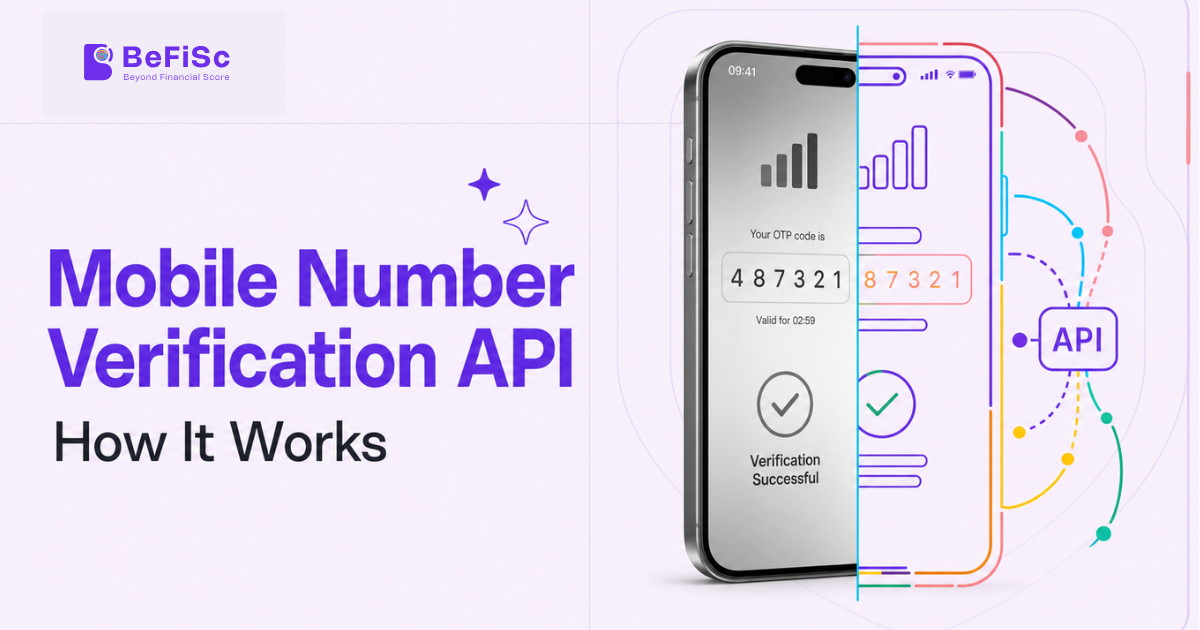
A Mobile Number Verification API automates these checks: it validates a number, returns its attributes and risk signals, and (where available) checks name consistency as a machine-readable response integrated into onboarding and risk flows.
BeFiSc’s identity stack (IDProof / Be Suite) includes mobile number verification, returning validity, attributes, and risk signals so you can assess the number’s genuineness at onboarding, integrated with name-match, Aadhaar/PAN, and digital-footprint signals for a complete identity picture. With API-first, transparent pricing, and sandbox access, it adds mobile verification to onboarding without an enterprise contract.
What a mobile verification API enables:
- Instant onboarding checks: verify numbers in real time.
- Line-type and risk signals: flag virtual, new, and fraud-associated numbers.
- Name-consistency checks: where available, match the number’s associated name to the applicant.
- Bulk verification: verify many numbers at once.
- Integrated risk scoring: feed number signals into your fraud and risk models.
If the mobile number anchors your customer accounts, verifying it is foundational. Get API access and verify mobile numbers at onboarding.
Frequently Asked Questions
Is there a mobile number verification API?
Yes, a mobile number verification API validates a number and returns its attributes, risk signals, and (where available) name consistency as a machine-readable response, integrated into onboarding and risk flows. BeFiSc’s IDProof includes mobile verification with risk signals, supporting instant and bulk checks with transparent, API-first pricing.
What fraud signals does mobile number verification surface?
It surfaces virtual/VoIP numbers (often used in fraud), recently acquired numbers with no history, name mismatches (the number’s associated name not matching the applicant), and fraud-associated numbers/inconsistencies with other data, helping distinguish genuine applicants with established personal numbers from fraudsters with virtual, new, or mismatched ones.
What’s the difference between OTP verification and number verification?
OTP verification confirms the person can receive a message at the number right now (momentary control), but doesn’t reveal whether the number is virtual, new, or associated with a different name. Number verification examines the number’s validity, type, attributes, and risk signals. They’re complementary;entary using both is stronger than either alone.
Why is mobile number verification important?
Because in India the mobile number anchors the account,nt it receives OTPs, serves as login and recovery, and links to payments,nts making it both a critical identity anchor and a prime fraud target. Fraudsters use virtual, new, and mismatched numbers to open fraudulent accounts, so verifying the number filters out fraud at onboarding.
What is mobile number verification?
Mobile number verification confirms that a phone number is genuine, active, and, depending on the check,ck consistent with the person providing it. It ranges from basic validity (is this a real, active number?) to richer verification of line type, operator, associated name, and fraud risk signals, functioning as an identity and fraud check.
Conclusion
In Indian digital finance, the mobile number is the account, the OTP destination, the login, the recovery method, the payment handle. That centrality makes verifying it one of the highest-leverage checks in onboarding, because a fraudulent number becomes the anchor of a fraudulent account, and everything built on it inherits the risk. Fraudsters know this, which is why virtual numbers, fresh SIMs, and mismatched numbers are such common tools and why confirming that a number is genuine, personal, and consistent with the applicant catches fraud exactly where it tries to enter.
The key insight is that receiving an OTP isn’t enough: it proves momentary control, not genuineness. Number verification examines the number itself its type, attributes, associated name, and risk signals catching what OTP alone misses. Automated via API and combined with name-match, identity, and digital-footprint signals, it turns the mobile number from a fraud vulnerability into a fraud filter. BeFiSc’s IDProof brings mobile number verification into an integrated, API-first identity stack with transparent pricing. If the mobile number anchors your accounts, verifying it is foundational. Get API access and verify mobile numbers at onboarding, before a fraudulent number becomes a fraudulent account.